Photo credit:
MHT File Photo, 06/1995
|
Herman Barton Indian Village Archeological Site
Inventory No.:
AL-VI-A-005
Other Name(s):
Barton Village Site
Date Listed:
5/12/1975
Location:
(MD 956) , , Pinto, , Allegany County
Category:
Site
Period/Date of Construction:
Late Woodland-Late Prehistoric
|
|
Description:
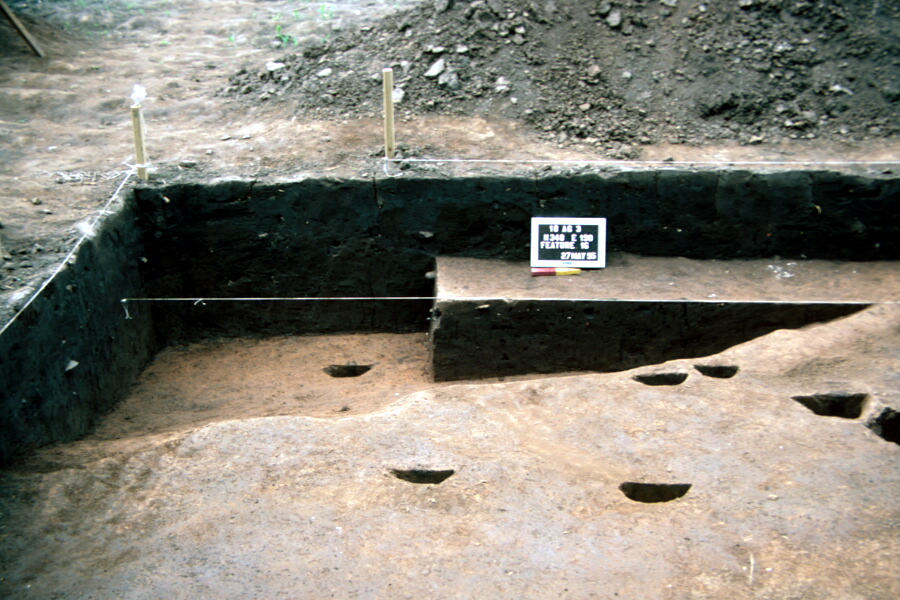
This site was explored in 1960 by Henry Wright, who excavated a 5 x 10 foot, 30-inch deep exploratory stratacut, revealing six cultural layers representing three phases of late prehistoric occupation, c. A.D. 1000-1500. The three main components are defined by ceramic wares found in the stratacut. At the lowest levels, ceramics are tempered with various crushed rock (limestone, sandstone, quartz, chert), either singly or in mixed combinations. Above this stratum, limestone-tempered ceramics predominate. And the uppermost levels of the profile yield primarily shell-tempered pottery.
|
Significance:
The stratified Barton Indian Village site has provided essential data for constructing the developmental sequence of assemblages from the terminal Woodland to the terminal Prehistoric periods in the Upper Potomac River Valley. The site produced evidence of an indigenous terminal Woodland component replaced by Late Prehistoric groups from the Ohio drainage basin. These groups subsequently replaced the earlier cultures and developed into a manifestation of the Monongahela culture. The site is vital for understanding group stability in the late Prehistoric period, cultural development and subsistence-settlement systems of horticulturists in the Allegheny province, and possibly the protohistoric depopulation of the area. The Shawnee utilization of the area for the cultivation of corn and other crops is of historical interest.
|
|
