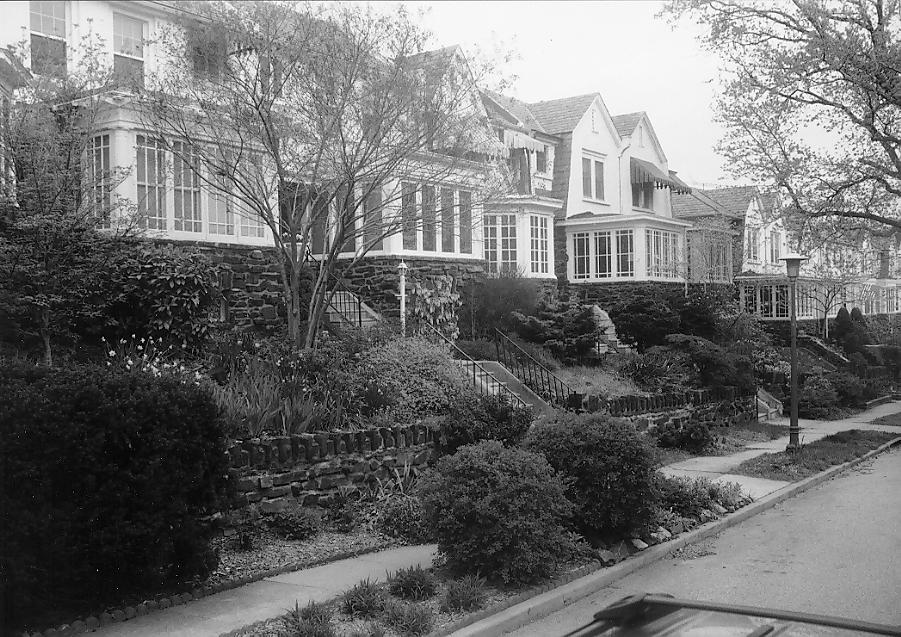
Photo credit:
Mary Ellen Hayward, 05/2003
|
Ednor Gardens Historic District
Inventory No.:
B-1361
Date Listed:
3/30/2004
Location:
Baltimore City, Baltimore City
Category:
District
Period/Date of Construction:
1925-1960
Architect/Builder:
Edward Gallagher, Jr.
Resources:
99 (99 contributing, 0 non-contributing)
|
|
Description:
The Ednor Gardens Historic District is a residential community developed by the large-scale Baltimore developer Edward J. Gallagher and his sons between 1925 and 1950. Comprising some 29 blocks located in north Baltimore, Ednor Gardens is distinguished by Tudor, Norman, and Colonial-style dwellings, primarily rowhouses, that reflect national changes in residential architectural tastes from the mid 1920s through the World War II era. Using his son as architect, Edward J. Gallagher set about creating a new kinds of rowhouse community in Baltimore, "the English village in the city," with stylish houses aimed at a middle-income market and offering all the modern amenities that a homeowner might want in 1925, including built-in garages. The quality of design and conclusion made Ednor Gardens the most aesthetically successful of the several English-style rowhouse communities built in the late 1920s in this price range in the city. When the company began building again in 1936, after the worst years of the Depression, Gallagher, Jr. was designing "colonial" row- and detached houses, reflecting a national design choice influenced by the opening of Colonial Williamsburg in the early 1930s. The district is exceptionally cohesive and retains a high level of integrity. The 885 houses today remain substantially unaltered, and the terraced gardens planned by the developer as part of his overall concept have reached maturity.
|
Significance:
The Ednor Gardens Historic District is significant as an example of a type of residential subdivision which characterized Baltimore in the second quarter of the 20th century. Planned to appeal to an increasingly suburbanizing middle-class market, Ednor Gardens featured quality construction and innovative design features. With its romantic English-influenced architecture and carefully planned landscaping, Ednor Gardens clearly distinguished itself from the city's familiar dense urban neighborhoods of red brick rowhouses. Its middle-class appeal was enhanced by practical features important to consumers of the time; houses had open "daylight" floor plans, and incorporated basement garages for the increasingly popular automobile. The buildings of Ednor Gardens document the stylistic changes in architectural taste that took place in many parts of America from the mid 1920s into the post-World War II era. The early phases of development employed the Tudor Revival style, continuing the picturesque imagery that had been popular in American suburbs beginning in the 1890s. By the mid 1930s, the effects of the Depression, as well as the opening of Colonial Williamsburg, had influenced Americans to seek the security of their colonial past, a national trend clearly reflected in the Colonial Revival rowhouses that characterized the later development of Ednor Gardens. Ednor Gardens is also significant for its association with the suburban development of Baltimore City in the early 20th century. While the majority of residential development in Baltimore after the turn of the 20th century was directed toward providing moderately priced housing from the expanding working class, by the end of World War I developers increasingly turned their attention to the middle-class market. Ednor Gardens represents the response to this trend by one of Baltimore's most prominent residential developers of the period. Edward J. Gallagher, Sr. began operations in the 1880s and by the early 1900s the Edward J. Gallagher Realty Company was among the four most prolific residential builders in Baltimore. The family-owned company continued to play a major role in the residential development of the city through the World War II era. Ednor Gardens is one of the most significant products of the Gallagher enterprise. All of the company's business records, architectural drawings, and advertisements have survived, extending through the Depression and postwar years. These archives provide invaluable insight into this era of home-building in America, documenting improvements in domestic technology and public services as well as how national programs like the FHA and the GI Bill helped Americans of moderate means become homeowners.
|
|
District Resources
(99) (99 contributing, 0 non-contributing)
From associated listing in National Register nomination form. C = Contributing, NC = non-contributing, blank = not evaluated.
| 1118-1134 36th Street | C | |
| 1100-1116 36th Street | C | |
| 1018-1034 36th Street | C | |
| 1000-1016 36th Street | C | |
| 3600-3614 Ednor Road | C | |
| 3616-3632 Ednor Road | C | |
| 3601-3633 Yolando Road | C | |
| 3600-3632 Yolando Road | C | |
| 3601-3633 Kimble Road | C | |
| 3600-3632 Kimble Road | C | |
| 3601-3633 Rexmere Road | C | |
| 3600-3632 Rexmere Road | C | |
| 900-920 36th Street | C | |
| 3601-3637 Elkader Road | C | |
| 3600-3618 Elkader Road | C | |
| 3620-3628 Elkader Road | C | |
| 3630-3636 Elkader Road | C | |
| 900-916 McKewin Street | C | |
| 601-911 McKewin Street | C | |
| 901-923 37th Street | C | |
| 900-926 37th Street | C | |
| 3700-3712 Rexmere Road | C | |
| 3714-3726 Rexmere Road | C | |
| 3701-3713 Rexmere Road | C | |
| 3715-3727 Rexmere Road | C | |
| 3701-3733 Elkader Road | C | |
| 3700-3716 Elkader Road | C | |
| 1200-1210 36th Street | C | |
| 3600-3606 The Alameda | C | |
| 1300-1318 36th Street | C | |
| 1201-1211 36th Street | C | |
| 1301-1319 36th Street | C | |
| 3700-3714 The Alameda | C | |
| 3700-3714 Loch Raven Boulevard | C | |
| 3600-3606 Loch Raven Boulevard | C | |
| 3701-3711 Loch Raven Boulevard | C | |
| 3700-3712 Kimble Road | C | |
| 3714-3726 Kimble Road | C | |
| 3701-3713 Kimble Road | C | |
| 3715-3727 Kimble Road | C | |
| 3700-3728 Yolando Road | C | |
| 3701-3729 Yolando Road | C | |
| 900-924 Chestnut Hill Avenue | C | |
| 901-925 Chestnut Hill Avenue | C | |
| 3601-3611 Ednor Road | C | |
| 3613-3623 Ednor Road | C | |
| 3701-3723 Ednor Road | C | |
| 3700-3728 Ednor Road | C | |
| 3800-3816 Ednor Road | C | |
| 3818-3834 Ednor Road | C | |
| 3801-3813 Ednor Road | C | |
| 3900-3916 Ednor Road | C | |
| 3918-3934 Ednor Road | C | |
| 3905-3921 Ednor Road | C | |
| 3923-3939 Ednor Road | C | |
| 3901-3903 Ednor Road (duplex) | C | |
| 3801-3817 Yolando Road | C | |
| 3819-3835 Yolando Road | C | |
| 3800-3816 Yolando Road | C | |
| 3818-3834 Yolando Road | C | |
| 3901-3917 Yolando Road | C | |
| 3919-3935 Yolando Road | C | |
| 3900-3916 Yolando Road | C | |
| 3918-3934 Yolando Road | C | |
| 3801-3817 Kimble Road | C | |
| 3819-3835 Kimble Road | C | |
| 3900-3816 Kimble Road | C | |
| 3818-3834 Kimble Road | C | |
| 3901-3917 Kimble Road | C | |
| 3919-3935 Kimble Road | C | |
| 3900-3916 Kimble Road | C | |
| 3918-3934 Kimble Road | C | |
| 901-915 Andover Road | C | |
| 900-916 Andover Road | C | |
| 1001-1015 Andover Road | C | |
| 1000-1016 Andover Road | C | |
| 1101-1115 Andover Road | C | |
| 1100-1116 Andover Road | C | |
| 3815-3829 Crestlyn Road | C | |
| 3700-3710 Delverne Road | C | |
| 3712-3722 Delverne Road | C | |
| 3703-3711 Delverne Road | C | |
| 3719-3725 Delverne Road | C | |
| 3700-3706 Monterey Road | C | |
| 3708-3718 Monterey Road | C | |
| 3701-3711 Monterey Road | C | |
| 3800-3808 Monterey Road | C | |
| 3801-3817 Rexmere Road | C | |
| 3819-3835 Rexmere Road | C | |
| 3800-3816 Rexmere Road | C | |
| 3818-3834 Rexmere Road | C | |
| 3901-3917 Rexmere Road | C | |
| 3919-3935 Rexmere Road | C | |
| 3900-3916 Rexmere Road | C | |
| 3918-3934 Rexmere Road | C | |
| 3810-3816 Monterey Road | C | |
| 3800-3806 Delverne Road | C | |
| 3808-3818 Delverne Road | C | |
| 3801-3809 Delverne Road | C | |
