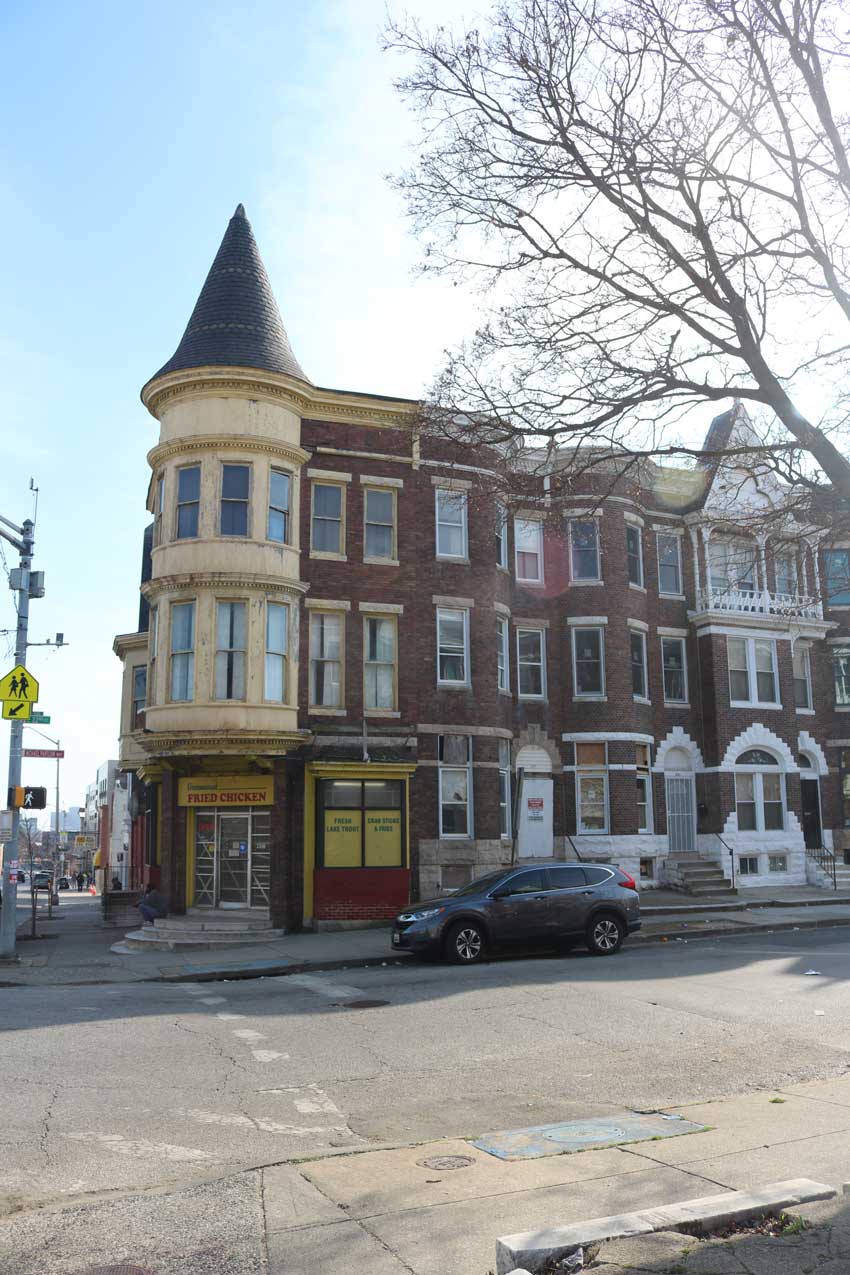
Photo credit:
Eli Pousson, 03/2021
|
Barclay/East Baltimore-Midway Historic District
Inventory No.:
B-5334
Date Listed:
3/1/2024
Location:
E. 20th Street, E. 20th ½ Street, E. 21st Street, E. 21st ½ Street, E. 22nd Street, E. 22nd ½ Street, E. 23rd Street, E. 23rd ½ Street, E. 24th Street, E. 25th Street, Aiken Street, Aisquith Street, Barclay Street, Bartlett Avenue, Bonaparte Avenue, Boone Street, Brentwood Avenue, Camp Street, Cecil Avenue, Cliftview Avenue, Cokesbury Avenue, Curtain Avenue, Darley Avenue, Garrett Avenue, Greenmount Avenue, Guilford Avenue, Gutman Avenue, Harford Road, Hargest Lane, Heaver Street, Homewood Avenue, Hope Street, Kennedy Avenur, Kirk Avenue, Loch Raven Road, E. North Avenue, Oak Hill Avenue, Robb Street, Saint Anns Avenue, Sapp Street, Sherwood Avenue, Wapert Avenue, Worsley Street, Baltimore, Baltimore City
Category:
District
Period/Date of Construction:
c.1875-c.1950
Boundary Description:
The district’s approximate boundaries include: • E. North Avenue between Barclay Street and Harford Road • Harford Road between E. North Avenue and E. 25th Street • E. 25th Street between Harford Road and Barclay Street • Barclay Street between E. 25th Street and E. North Avenue.
|
|
Description:
The Barclay/East Baltimore-Midway Historic District is a late nineteenth- and early twentieth-century streetcar suburb located about two miles north of downtown Baltimore. Early industrial development of the historic district prior to the area’s 1888 annexation into the city and a steeply graded stream valley east of Greenmount Avenue combined to promote an unusually varied mix of industrial and residential development across around 138 acres of land. The district includes 1,928 contributing buildings constructed between the late nineteenth and mid twentieth centuries. Eighty-seven late twentieth- and early twenty-first century buildings are also included (largely a group of infill townhouse development in the Barclay neighborhood known as North Barclay Green). Demolition of rowhouses and industrial buildings has also created 501 vacant lots, some of which have been adapted into small community-managed open spaces. Most buildings in the district are two- or three-story brick rowhouses built between the late 1890s and early 1920s. These rowhouses follow a range of vernacular styles that can be characterized within the broader typology of designs used by Baltimore builders and architects at this time. The district further includes a small number of detached and duplex style houses built between the 1880s and early 1890s that preceded the extension of streetcar lines through the area. There are a small number of industrial buildings in the district constructed between the 1920s and 1940s following the substantial completion of the area’s residential development. In addition, four major streets within or at the boundary of the district -- Greenmount Avenue, E. 25th Street, Harford Road, and E. North Avenue -- all served as major commercial and retail corridors between the early- and mid-twentieth century and include many rowhouses with storefronts or other additions designed to support the adaptation of rowhouses for commercial use.
|
Significance:
The Barclay/East Baltimore-Midway Historic District is associated with a series of events that have made a significant contribution to the broad pattern of Baltimore’s history. The early use of the property for tanneries and other industrial land uses along with suburban residential development such as the cottage style duplexes located in the northeastern corner of the district is characteristic of pre-1888 annexation land use patterns. The district also illustrates the transition from the pre- to post-annexation development of former suburban areas. Development in this and other areas was greatly accelerated by the expansion of the electric streetcar system but simultaneously complicated by conflicts over land use and the work of incorporating the existing development into the growing city. In Barclay/East Baltimore-Midway, these latter complications are particularly evident in the street grid, which combines patterns from three distinct periods of development. The district also reflects the distinctive characteristics of the rowhouse architectural type.
|
|
